Developing Your Coping Statements
This exercise helps clients identify negative self-statements that interfere with assertive communication, and develop adaptive coping statements that support self-expression.
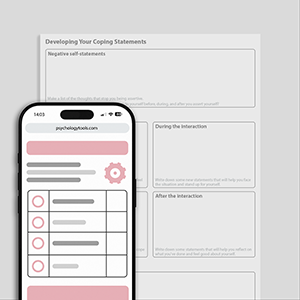
Developing Your Coping Statements
Assertiveness is clear, honest, and respectful way of communicating. Learning how to express yourself in this way can improve your mood, relationships, and work life.
Strong emotions like anxiety, anger, and fear can it hard to be assertive. Often, the things we say to ourselves during difficult interactions – our negative thoughts or 'self-talk' – contribute to these feelings.
If you experience strong emotions when you express yourself, it can help to develop more supportive self-talk, known as coping statements. This exercise will guide in developing coping statements so you can stay calm, feel confident, and communicate effectively.
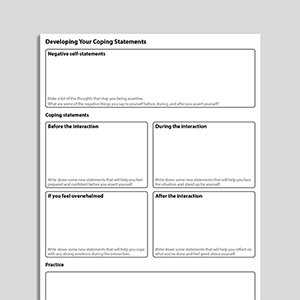
Overview
Research indicates that negative thoughts and beliefs can affect the way people communicate. For this reason, several assertiveness training programs address the negative ‘self-statements’ that hinder assertive communication. The Developing Your Coping Statements exercise is informed by self-instructional training. It is designed to help clients identify their negative self-statements and develop alternative coping statements that support assertive communication and emotional regulation during challenging interactions.
Also available as:
PDF ToolUse this tool with your clients
Support therapeutic work between sessions.
Assign
Send the tool securely to your client.
Client completes
Your client works through it on any device, at their own pace.
Review
Review their responses before the next session.
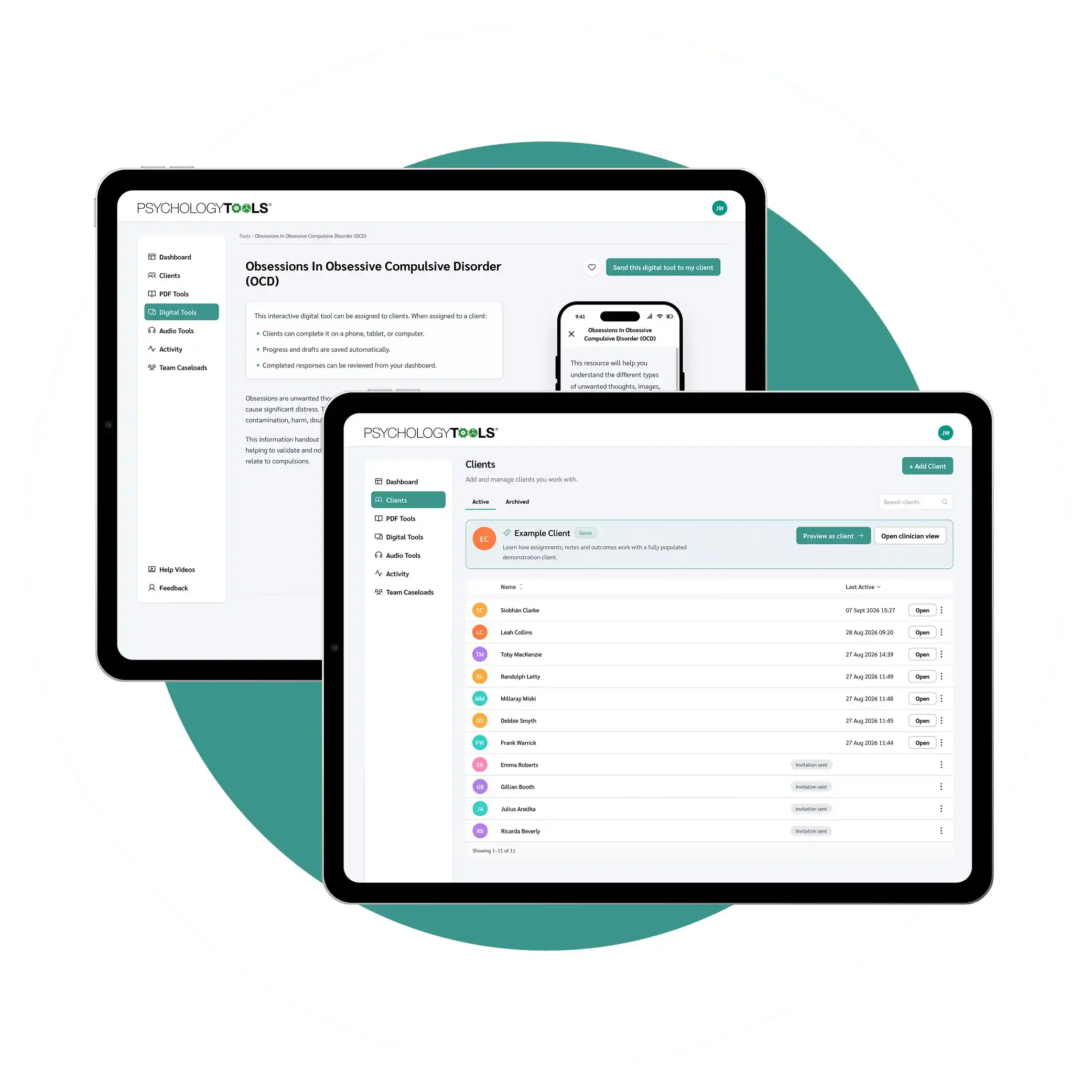
Part of a complete library of evidence-based tools
Worksheets, guides, audio resources and interactive digital tools for mental health professionals.