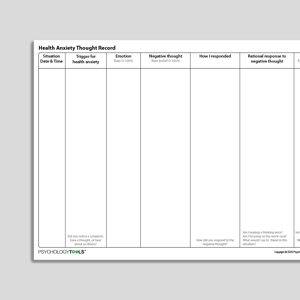
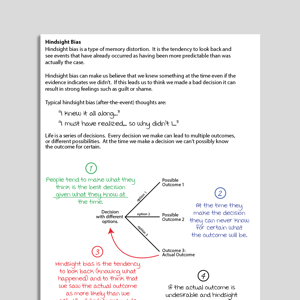
Evaluating Unhelpful Automatic Thoughts
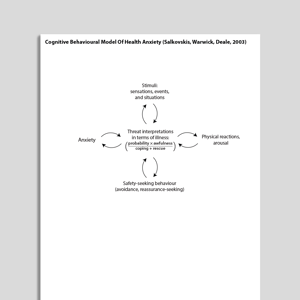
Cognitive Behavioral Model Of Health Anxiety (Salkovskis, Warwick, Deale, 2003)
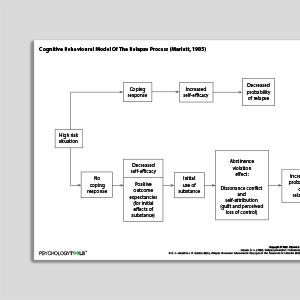
Cognitive Behavioral Model Of The Relapse Process (Marlatt & Gordon, 1985)
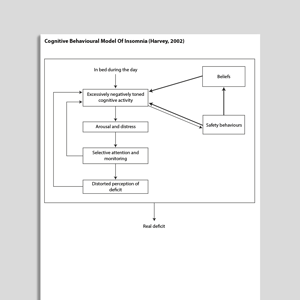
Cognitive Behavioral Model Of Insomnia (Harvey, 2002)
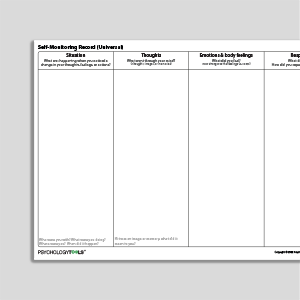
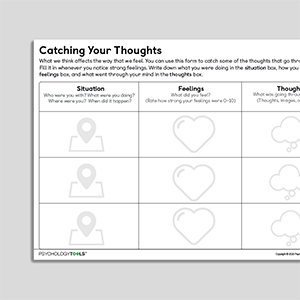
Self-Monitoring Record (Universal)
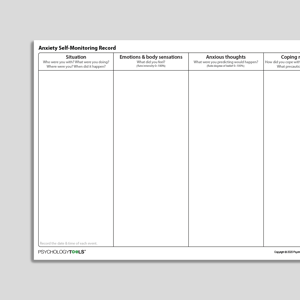
Anxiety - Self-Monitoring Record
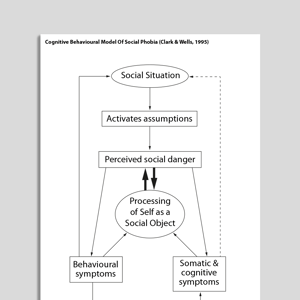
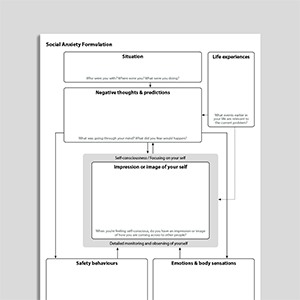
Cognitive Behavioral Model Of Social Phobia (Clark, Wells, 1995)
Depression - Self-Monitoring Record
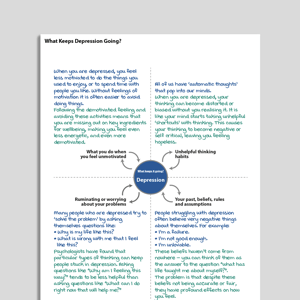
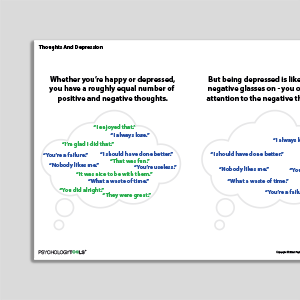
What Keeps Depression Going?
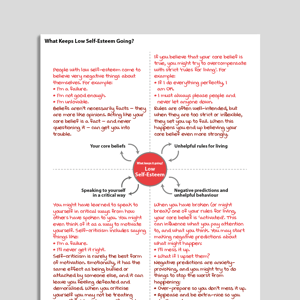
What Keeps Low Self-Esteem Going?
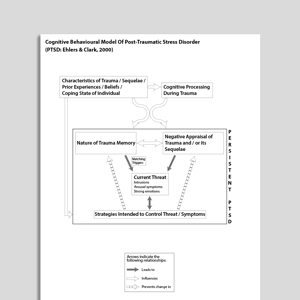
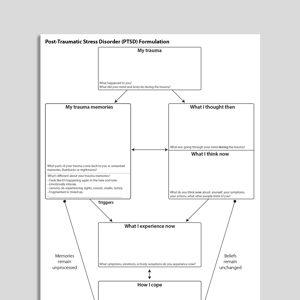
Post-Traumatic Stress Disorder (PTSD) Formulation
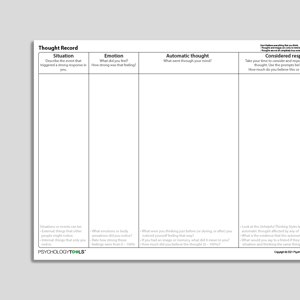
Thought Record (Considered Response)
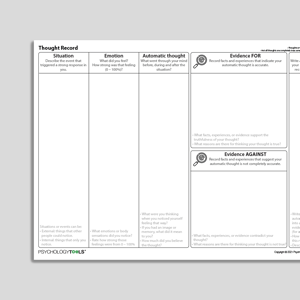
Thought Record (Evidence For And Against)
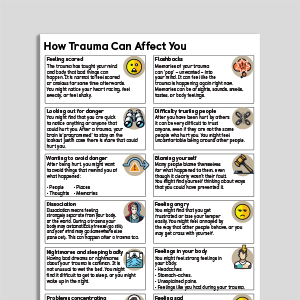
How Trauma Can Affect You (CYP)
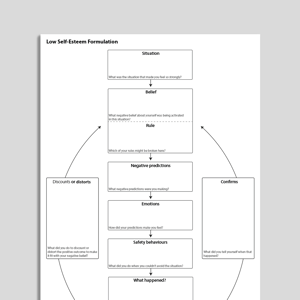
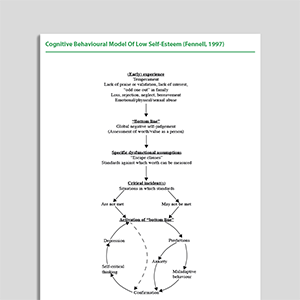
Cognitive Behavioral Model Of Low Self-Esteem (Fennell, 1997)
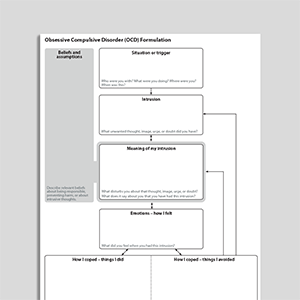
Obsessive Compulsive Disorder (OCD) Formulation
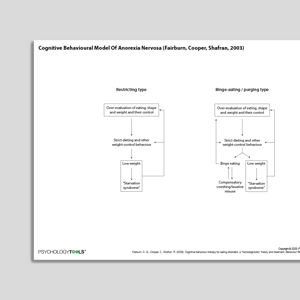
Cognitive Behavioral Model Of Anorexia Nervosa (Fairburn, Cooper, Shafran, 2003)
Challenging Your Negative Thinking (Archived)
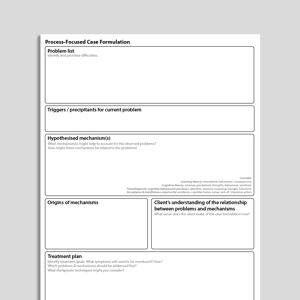
Process Focused Case Formulation
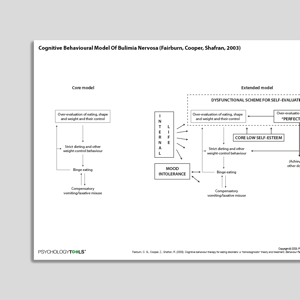
Cognitive Behavioral Model Of Bulimia Nervosa (Fairburn, Cooper, Shafran, 2003)
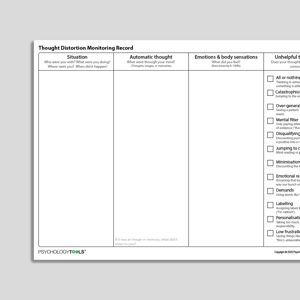
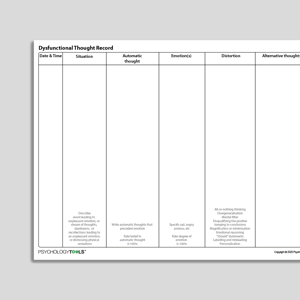
Thought Distortion Monitoring Record (Archived)
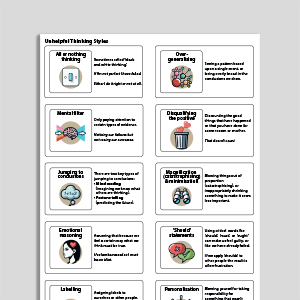
Unhelpful Thinking Styles (Archived)
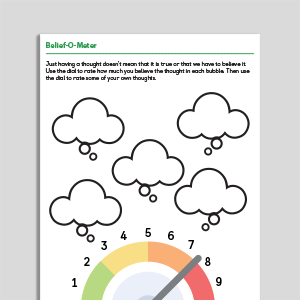
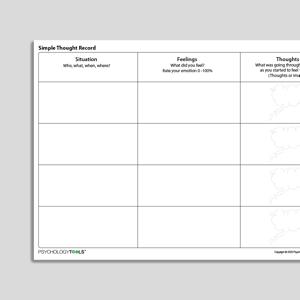
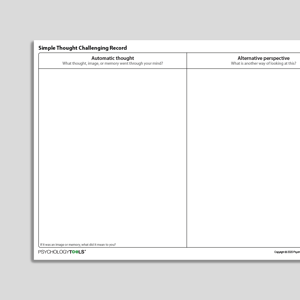
Simple Thought Challenging Record
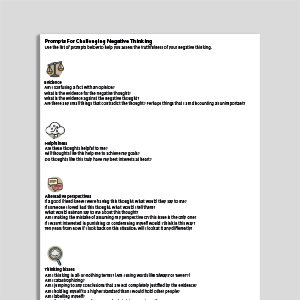
Prompts For Challenging Negative Thinking (Archived)
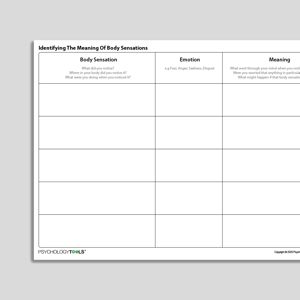
Identifying The Meaning Of Body Sensations
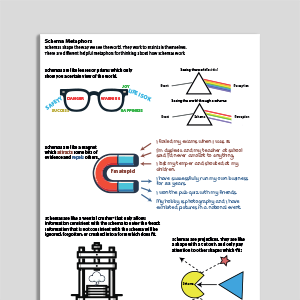
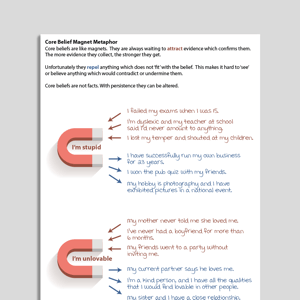
Core Belief Magnet Metaphor
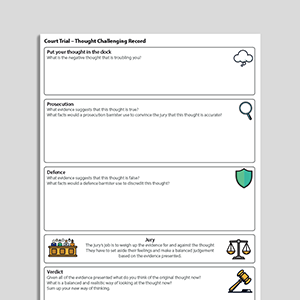
Court Trial Thought Challenging Record (Archived)
What Is Cognitive Bias?
Disorders That May Be Maintained by Cognitive Bias
Cognitive biases, including biased interpretations, attributions, expectancies, or heuristics, are thought to contribute to the maintenance of:panic disorder (interpretation bias, attribution bias, expectancy bias, emotional reasoning);
specific phobia (expectancy bias, emotional reasoning);
social phobia (interpretation bias, attribution bias, expectancy bias);
obsessive compulsive disorder (OCD) (attribution bias, expectancy bias, emotional reasoning);
post-traumatic stress disorder (PTSD) (interpretation bias, attribution bias, expectancy bias, emotional reasoning);
generalized anxiety disorder (GAD) (interpretation bias, attribution bias, expectancy bias, emotional reasoning);
pain disorder (interpretation bias, expectancy bias);
health anxiety (interpretation bias, attribution bias, expectancy bias);
eating disorders (interpretation bias, attribution bias, expectancy bias);
depression (interpretation bias, attribution bias, expectancy bias);
bipolar disorder (attribution bias);
psychosis (interpretation bias, attribution bias, expectancy bias);
substance misuse (interpretation bias, attribution bias, expectancy bias).
Helpful Questions for Assessing Cognitive Bias
Some helpful questions for assessing cognitive bias:What do you think will happen if you do X or Y?
What predictions are you making in this situation?
What sort of evidence are you using to make this judgment or prediction?
What do you expect will happen here?
How do you know what will happen?
Treatment Approaches That Target Cognitive Bias
A wide range of treatment interventions are designed to target cognitive bias. These can include:data gathering exercises that aim to overcome attentional biases;
thought-challenging exercises that aim to identify and then overcome cognitive distortions;
exposure and behavioral experiments that target expectancy biases.
References
Beck, A. T. (1963). Thinking and depression: I. Idiosyncratic content and cognitive distortions. Archives of General Psychiatry, 9(4), 324–333.
Harvey, A. G., Watkins, E., Mansell, W., & Shafran, R. (2004). Cognitive behaviouralprocesses across psychological disorders: A transdiagnostic approach to research and treatment. New York: Oxford University Press.
Kahneman, D. (2011). Thinking, fast and slow. New York: Farrar, Straus and Giroux.
Links to external resources
Psychology Tools makes every effort to check external links and review their content. However, we are not responsible for the quality or content of external links and cannot guarantee that these links will work all of the time.
Please login to view our external resources.