What Is Obsessive Compulsive Disorder?
Signs and Symptoms of OCD
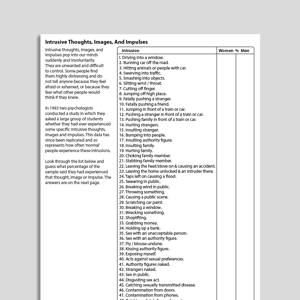
People with OCD experience obsessional thoughts, images, urges, and doubts. They often feel compelled to act or think in certain ways.Obsessions are intrusive thoughts—thoughts that are unwanted and unacceptable, and which pop into our minds unbidden. Obsessions can be thoughts in the form of words, but also of images (pictures in our minds), urges or impulses, or feelings of doubt. Obsessive thoughts are experienced as unacceptable, disgusting, or senseless, and people with OCD find it hard not to pay attention to them. Examples of obsessions include:
thoughts such as ‘My hands have been contaminated with germs’ or ‘Perhaps I am a pedophile’
images of my family being murdered
doubts such as ‘Have I left the stove on?’
urges such as wanting to shout profanities
Compulsions follow from the way in which the individual interprets the intrusive thoughts. Compulsions are the reactions or mental actions that a person does in order to neutralize or ‘make safe’ following an obsession. People with OCD typically carry out compulsions in order to prevent a harm from happening for which they might be responsible, and/or to reduce any strong emotion which they feel. Exactly what someone with OCD may feel compelled to do will depend upon the meaning their intrusions have for them. Examples of compulsions might include:
carefully washing food after having an intrusive thought about germs;
calling family members to check they are OK after having an intrusive image about their deaths;
going back to the house to check after doubting whether the stove was turned off;
avoiding a public place after having an urge to shout profanities.
Prevalence of OCD
The lifetime prevalence rate of OCD in the United States is estimated to be 2.3% in adults (Kessler et al., 2005), and 1% to 2.3% in children and adolescents (Zohar, 1999).
Psychological Models and Theory of OCD
The cognitive behavioral theory of OCD proposes that when someone experiences an intrusive thought it is the appraisal—what they make of having the thought—that is most important (Salkovskis, Forrester, & Richards, 1998).
Intrusive thoughts, even very unpleasant ones, are common and entirely normal. What seems to happen in OCD is that the fact of having intrusive thoughts is interpreted as being especially significant and, as a result, is especially anxiety-provoking. People with OCD are more likely to feel especially responsible for any potential harms and may feel especially strong emotion should they have intrusive thoughts about harm occurring. Compulsions are understood to be an active attempt to reduce harm. According to the cognitive model of OCD targets for intervention include:
understanding and addressing the meaning of the intrusions;
targeting compulsions and safety-seeking behaviors;
modifying attentional biases.
Evidence-Based Psychological Approaches for Working with OCD
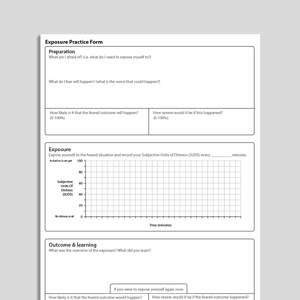
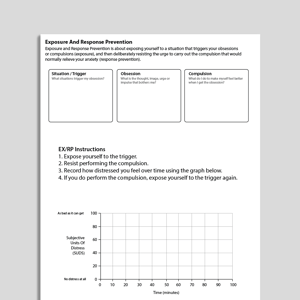
Cognitive behavioral therapy (CBT) is an evidence-based psychological treatment for OCD. Historically, CBT for OCD has involved the behavioral approach of exposure with response prevention (ERP). More cognitive approaches within CBT attempt to understand the patient’s appraisal of their intrusions and to find ways of exploring the validity and consequences of these appraisals.
Resources for Working with OCD
Psychology Tools resources available for working therapeutically with OCD may include:
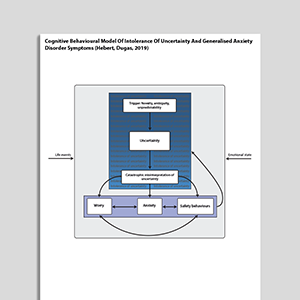
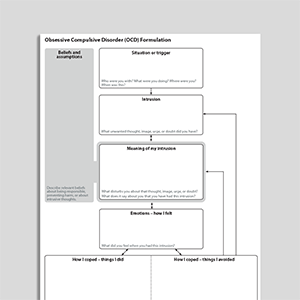
psychological models of obsessive-compulsive disorder (OCD)
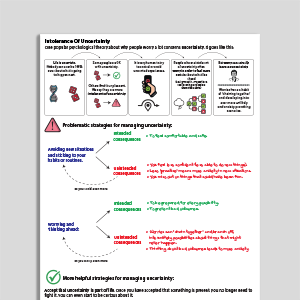
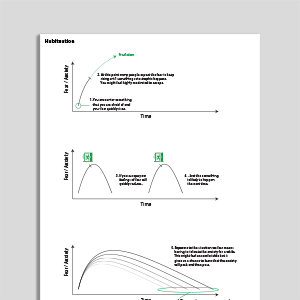
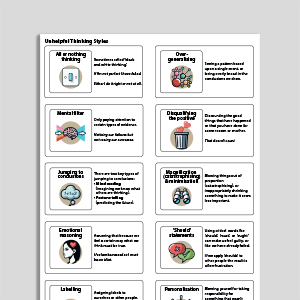
information handouts for obsessive-compulsive disorder (OCD)
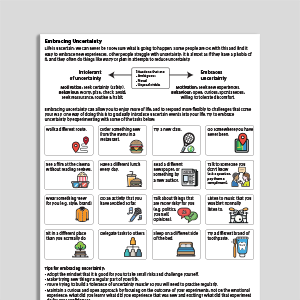
exercises for obsessive-compulsive disorder (OCD)
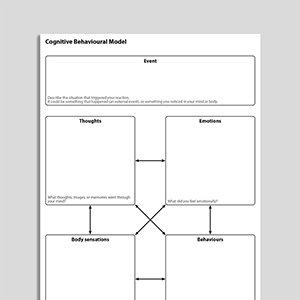
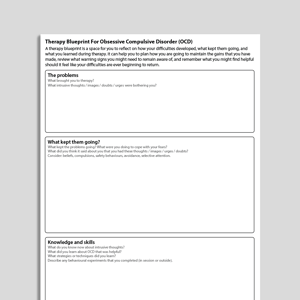
CBT worksheets for obsessive-compulsive disorder (OCD)
self-help programs for obsessive-compulsive disorder (OCD)
References
Kessler, R. C., Berglund, P., Demler, O., Jin, R., Merikangas, K. R., & Walters, E. E. (2005). Lifetime prevalence and age-of-onset distributions of DSM-IV disorders in the National Comorbidity Survey Replication. Archives of General Psychiatry, 62(6), 593–602.
Salkovskis, P. M., Forrester, E., & Richards, C. (1998). Cognitive–behavioral approach to understanding obsessional thinking. The British Journal of Psychiatry, 173(S35), 53–63.
Zohar, A. H. (1999). The epidemiology of obsessive-compulsive disorder in children and adolescents. Child and Adolescent Psychiatric Clinics of North America, 8(3), 445–460.