Sensory Grounding Using Your Five Senses (Audio)
Audio
Sensory Grounding Using Your Five Senses (Audio)
audio/mpeg
•
4.85 MB
Sensory Grounding Using Smells (Audio)
Audio
Sensory Grounding Using Smells (Audio)
audio/mpeg
•
5.53 MB
Relaxed Breathing Exercise 4 (Audio)
Audio
Relaxed Breathing Exercise 4 (Audio)
audio/mpeg
•
8.42 MB
Relaxed Breathing Exercise 3 (Audio)
Audio
Relaxed Breathing Exercise 3 (Audio)
audio/mpeg
•
8.05 MB
Relaxed Breathing Exercise 2 (Audio)
Audio
Relaxed Breathing Exercise 2 (Audio)
audio/mpeg
•
9.25 MB
Relaxed Breathing Exercise 1 (Audio)
Audio
Relaxed Breathing Exercise 1 (Audio)
audio/mpeg
•
8.42 MB
Progressive Muscle Relaxation (Audio)
Audio
Progressive Muscle Relaxation (Audio)
audio/mpeg
•
21.87 MB

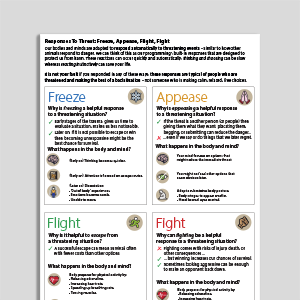
Responses To Threat: Freeze, Appease, Flight, Fight
Information Handouts
Responses To Threat: Freeze, Appease, Flight, Fight
application/pdf
•
194.56 KB
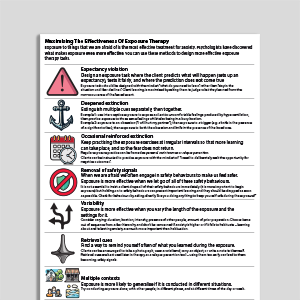
Maximizing The Effectiveness Of Exposure Therapy
Information Handouts
Maximizing The Effectiveness Of Exposure Therapy
application/pdf
•
193.7 KB
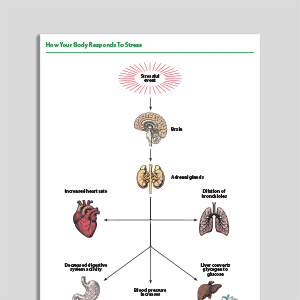
How Your Body Responds To Stress
Information Handouts
How Your Body Responds To Stress
application/pdf
•
855.86 KB
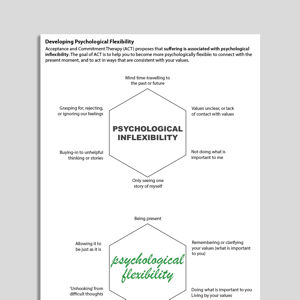
Developing Psychological Flexibility
Information Handouts
Developing Psychological Flexibility
application/pdf
•
113.29 KB
Challenging Your Negative Thinking (Archived)
Archived
Challenging Your Negative Thinking (Archived)
application/pdf
•
1.51 MB
Combined Relaxation Exercise (Audio)
Audio
Combined Relaxation Exercise (Audio)
audio/mpeg
•
28.71 MB
Psychology Tools For Living Well
Guides & Workbooks
Psychology Tools For Living Well
application/pdf
•
9.58 MB
Psychology Tools For Overcoming Panic
Guides & Workbooks
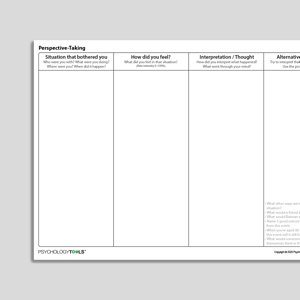
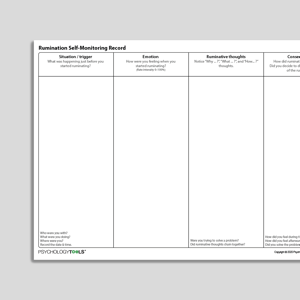
Rumination Self-Monitoring Record (Archived)
Archived
Rumination Self-Monitoring Record (Archived)
application/pdf
•
26.92 KB
What Is Exposure Therapy?
Information Handouts
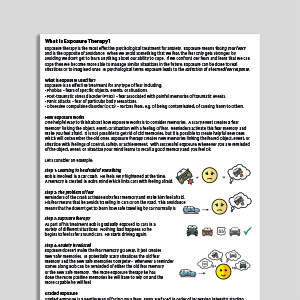
What Is Exposure Therapy?
application/pdf
•
247.53 KB
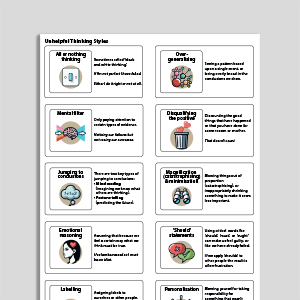
Unhelpful Thinking Styles (Archived)
Archived
Unhelpful Thinking Styles (Archived)
application/pdf
•
309.51 KB
Progressive Muscle Relaxation (Archived)
Archived
Progressive Muscle Relaxation (Archived)
application/pdf
•
558.69 KB
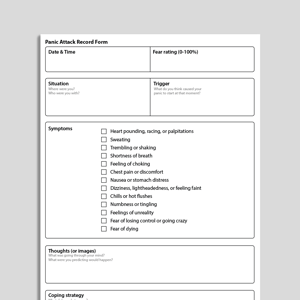
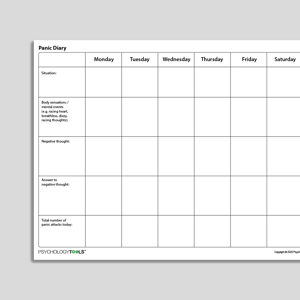
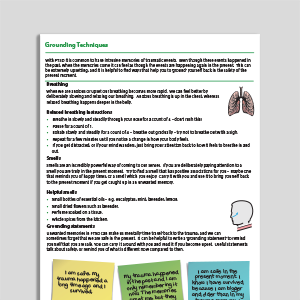
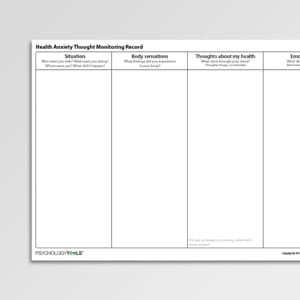
Health Anxiety Self-Monitoring Record (Archived)
Archived
Health Anxiety Self-Monitoring Record (Archived)
application/pdf
•
91.02 KB
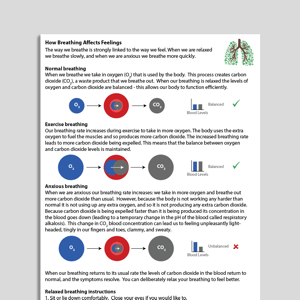
How Breathing Affects Feelings
Information Handouts
How Breathing Affects Feelings
application/pdf
•
446.7 KB
Identifying The Meaning Of Body Sensations
Worksheets
Identifying The Meaning Of Body Sensations
application/pdf
•
301.19 KB
What Is Anxiety?
Signs and Symptoms of Anxiety Disorders
Different anxiety disorders are characterized by various foci of concern.Health anxiety is characterized by concern about one’s health or illness.
Panic attacks are characterized by an abrupt surge or intense fear.
palpitations or accelerated heart rate
sweating
trembling or shaking
dry mouth
difficulty breathing
a feeling of choking
nausea or abdominal discomfort
dizziness
derealization or depersonalization
fear of losing control or passing out
fear of dying
hot flushes or cold chills
numbness or tingling
blushing
fear of vomiting
urgency or fear of urination or defecation
Psychological Models and Theories of Anxiety
One broad conceptualization of anxiety can be summarized by an ‘anxiety equation’ (Beck, Emery, & Greenberg, 1985; Salkovskis, Forrester, & Richards, 1998):Anxiety = (perceived probability of therapy × perceived cost or awfulness of danger)÷ (perceived ability to cope + perceived ‘rescue factors’)Disorder-specific ‘CBT for anxiety’ cognitive models have been developed for all of the anxiety disorders. These are helpful in that they direct the therapist’s attention toward key interpretations and behaviors that act to perpetuate the anxiety disorders. For example, the critical mechanism that Clark identified in the cognitive model of panic (1986) is that body sensations are misinterpreted catastrophically as signs of danger, with concomitant effects upon emotions, behavior, and secondary cognitions.
Evidence-Based Psychological Approaches for Working with Anxiety
Cognitive behavior therapy has a strong evidence base for treating all of the anxiety disorders. Key components of CBT for anxiety interventions include exposure to the feared situations or stimulus, and an experimental approach to test the accuracy of beliefs.Resources for Working with Anxiety
Psychology Tools resources available for working therapeutically with anxiety may include:psychological models of anxiety
exercises for anxiety
CBT worksheets for anxiety
self-help programs for anxiety including a guide to overcoming panic attacks and panic disorder
References
Beck, A. T., Emery, G., & Greenberg, R. L. (1985). Anxiety disorders and phobias: A cognitive perspective. New York: Basic Books.
Clark, D. M. (1986). A cognitive approach to panic. Behaviour Research and Therapy, 24(4), 461–470.
Salkovskis, P. M., Forrester, E., & Richards, C. (1998). Cognitive–behavioral approach to understanding obsessional thinking. The British Journal of Psychiatry, 173(S35), 53–63.
Links to external resources
Psychology Tools makes every effort to check external links and review their content. However, we are not responsible for the quality or content of external links and cannot guarantee that these links will work all of the time.
Please login to view our external resources.