
![[Free Guide] An Introduction To Values](https://assets-media.psychologytools.com/28518/conversions/*-an_introduction_to_values_en-gb_Guides_Cover-preview.png)
[Free Guide] An Introduction To Values
Guides & Workbooks
[Free Guide] An Introduction To Values
application/pdf
•
2.24 MB
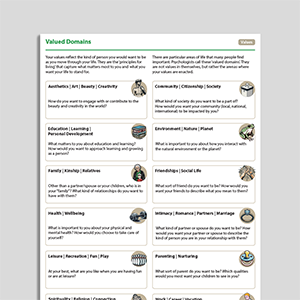
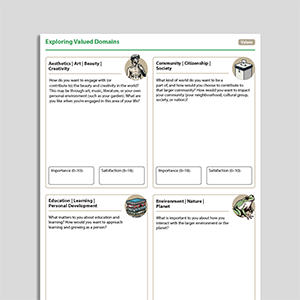
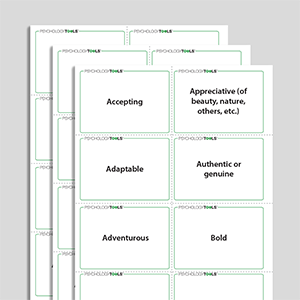

Values: Connecting To What Matters
Guides & Workbooks
Values: Connecting To What Matters
application/pdf
•
5.97 MB
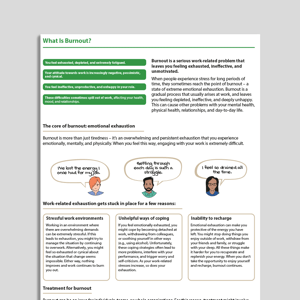
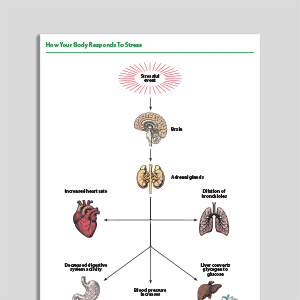
How Your Body Responds To Stress
Information Handouts
How Your Body Responds To Stress
application/pdf
•
855.86 KB
What Is Chronic Fatigue Syndrome / Myalgic Encephalomyelitis?
Signs and Symptoms of CFS/ME
CFS/ME is characterized by disabling tiredness (fatigue) that lasts a long time and cannot be explained by other causes. CFS/ME should be considered if the fatigue prevents the individual from doing things that they used to be able to, if the fatigue gets worse after activity or gentle exercise, or if the following symptoms are present:sleep problems
pain in the muscles or joints
headaches
sore throat or sore glands that aren’t swollen
problems thinking, remembering, concentrating, or planning
flu-like symptoms
feeling dizzy or sick or having palpitations
exercising or concentrating on something makes your symptoms worse
Psychological Models and Theory of CFS/ME
Understanding of the causes and maintenance of CFS/ME is incomplete. Biomedical factors likely play a role. Like any physical illness it is normal to have thoughts and feelings about symptoms and what they mean, and so psychological approaches also have potential clinical value. Models of CFS/ME including psychological factors include:Browne and Chalder (2006)
Burgess and Chalder (2004)
Vercoulen et al. (1998)
Harvey and Wessely (2009)
Roche, Dawson, Moghaddam, Abey, and Gresswell (2017)
Wiborg, Knoop, Frank, and Bleijenberg (2012)
References
Browne, T., & Chalder, T. (2006). Chronic fatigue syndrome. Psychiatry, 5(2), 48–51.
Burgess, M., & Chalder, T. (2004). Cognitive behaviourtherapy for CFS/ME: PACE manual for participants. MREC v. 2. Retrieved from: https://me-pedia.org/images/7/7a/PACE-cbt-participant-manual.pdf
Harvey, S. B., & Wessely, S. (2009). Chronic fatigue syndrome: Identifying zebras amongst the horses. BMC Medicine, 7(1), 58. https://doi.org/10.1186/1741-7015-7-58
Roche, L., Dawson, D. L., Moghaddam, N. G., Abey, A., & Gresswell, D. M. (2017). An Acceptance and Commitment Therapy (ACT) intervention for Chronic Fatigue Syndrome (CFS): A case series approach. Journal of Contextual Behavioral Science, 6(2), 178–186.
Science Media Centre (2018). Science Media Centre Factsheet: CFS/ME—The illness and the controversy. Retrieved from: http://www.sciencemediacentre.org/wp-content/uploads/2018/03/Science-Media-Centre-Factsheet-CFS-ME.pdf
Vercoulen, J. H. M. M., Swanink, C. M. A., Galama, J. M. D., Fennis, J. F. M., Jongen, P. J. H., Hommes, O. R., van der Meer, J. W., & Bleijenberg, G. (1998). The persistence of fatigue in chronic fatigue syndrome and multiple sclerosis: Development of a model. Journal of Psychosomatic Research, 45(6), 507–517.
Wiborg, J. F., Knoop, H., Frank, L. E., & Bleijenberg, G. (2012). Towards an evidence-based treatment model for cognitive behavioral interventions focusing on chronic fatigue syndrome. Journal of Psychosomatic Research, 72(5), 399–404.
Links to external resources
Psychology Tools makes every effort to check external links and review their content. However, we are not responsible for the quality or content of external links and cannot guarantee that these links will work all of the time.
Please login to view our external resources.