What Is Behavioral Activation?
History of BA
BA has its origins in the Skinner’s radical behavioral approach (Skinner, 1953). In the 1970s behaviorists trained by Skinner developed behavioral models of depression that proposed that depression could be treated by re-establishing contact with positive reinforcement and by learning social skills that are helpful for maintaining contact with stable sources of positive reinforcement (Ferster, 1973; Lewinsohn, 1974; Lewinsohn, Antonuccio, Steinmetz-Breckenridge, & Teri, 1984). Aaron Beck recognized the value of behavioral techniques in the treatment of depression and incorporated them into the original cognitive therapy manual (Beck, Rush, Shaw, & Emery, 1979). The paradigm shift toward cognitive approaches meant that purely behavioral treatments received relatively less attention. However, in 1996 Jacobson and colleagues published a component analysis comparing activity scheduling / behavioral activation; cognitive restructuring; and a combination of activity scheduling, cognitive restructuring, and core belief modification. The surprising result was that the combined CBT condition performed no better than the behavioral or cognitive interventions alone. In the wake of the Jacobson component analysis Martell, Addis, and Jacobson published a BA treatment package
Depression in Context: Strategies for Guided Actionin 2001. At the same time Lejuez, Hopko, and Hopko published an alternative BA package in 2001 titled Brief Behavioral Activation Treatment for Depression (BATD). Hopko, Lejuez, Ruggiero, and Eifert (2003) published a helpful comparison of the BA and BATD packages, and Kanter, Busch, and Rusch (2009) provide a helpful synthesis of BA and BATD concepts.
BA Interventions
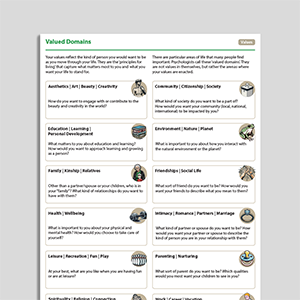
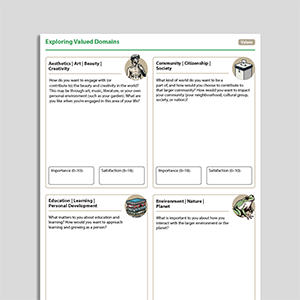
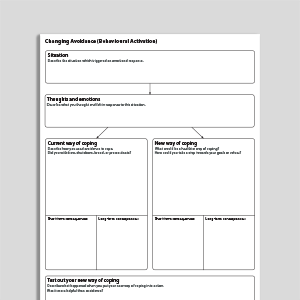
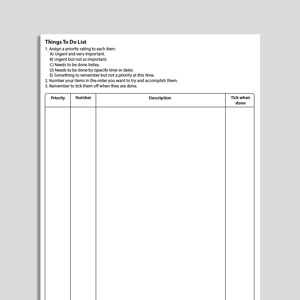
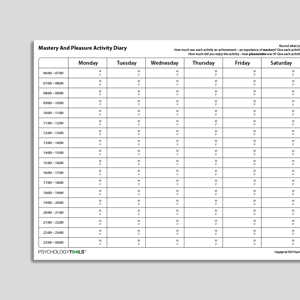
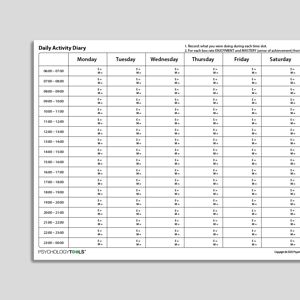
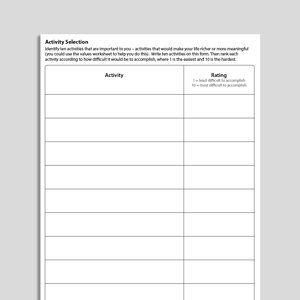
Two different implementations of behavioral activation are widely used: BA and BATD. Intervention techniques in BA/BATD include:
References
Beck, A. T., Rush, A. J., Shaw, B. F., & Emery, G. (1979). Cognitive therapy of depression. New York: Guilford Press.
Ferster, C. B. (1973). A functional analysis of depression. American Psychologist, 28(10), 857–870.
Hopko, D. R., Lejuez, C. W., Ruggiero, K. J., & Eifert, G. H. (2003). Contemporary behavioral activation treatments for depression: Procedures, principles, and progress. Clinical Psychology Review, 23(5), 699–717.
Jacobson, N. S., Dobson, K. S., Truax, P. A., Addis, M. E., Koerner, K., Gollan, J. K., … & Prince, S. E. (1996). A component analysis of cognitive-behavioral treatment for depression. Journal of Consulting and Clinical Psychology, 64(2), 295–304.
Kanter, J. W., Busch, A. M., & Rusch, L. C. (2009). Behavioral activation. CBT Distinctive Features Series.New York: Routledge.
Lejuez, C. W., Hopko, D. R., & Hopko, S. D. (2001). A brief behavioral activation treatment for depression: Treatment manual. Behavior Modification, 25(2), 255–286.
Lewinsohn, P. (1974). A behavioral approach to depression. In R. J. Friedman & M. M. Katz (Eds.), Psychology of depression: Contemporary theory and research. Washington, DC: Winston.
Lewinsohn, P. M., Antonuccio, D. O., Steinmetz-Breckenridge, J., & Teri, L. (1984). The coping with depression course. Eugene, OR: Castalia Press.
Martell, C. R., Addis, M. E., & Jacobson, N. S. (2001). Depression in context: Strategies for guided action. New York: Norton.
Skinner, B. F. (1953). Science and human behavior (No. 92904). Simon and Schuster.






![[Free Guide] An Introduction To Values](https://assets-media.psychologytools.com/28518/conversions/*-an_introduction_to_values_en-gb_Guides_Cover-preview.png)