Self-compassion

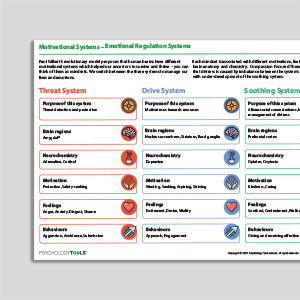
“Self-compassion entails being kind and understanding toward oneself in instances of pain or failure rather than being harshly self-critical; perceiving one’s experiences as part of the larger human experience rather than seeing them as isolating; and holding painful thoughts and feelings in mindful awareness rather than over-identifying with them” (Neff, Kirkpatrick, & Rude, 2007). Gilbert’s evolutionary account of compassion argues that the self-soothing qualities of self-compassion allow for more effective affect regulation, greater capacity for intimacy, and more adaptive behavior (Gilbert, 1989, 2005). Many individuals who have experienced neglect or abuse struggle to offer compassion toward themselves and struggle with shame and self-criticism as a result. Within compassion-focused therapy (CFT) techniques for fostering and developing self-compassion are referred to as compassionate mind training (CMT).

+ Show all problems
+ Show all therapy tools

References

  • Gilbert, P. (1989). Human nature and suffering. Hillsdale, NJ: Lawrence Erlbaum.

  • Gilbert, P. (2005). Compassion and cruelty: A biopsychosocial approach. In P. Gilbert (Ed.), Compassion: Conceptualisations, research and use in psychotherapy(pp. 9–74). New York: Routledge

  • Neff, K. D., Kirkpatrick, K. L., & Rude, S. S. (2007). Self-compassion and adaptive psychological functioning. Journal of Research in Personality, 41(1), 139–154.

Links to external resources

Psychology Tools makes every effort to check external links and review their content. However, we are not responsible for the quality or content of external links and cannot guarantee that these links will work all of the time.

Please login to view our external resources.